 Preview
Corporate training
Data Privacy Compliance Course
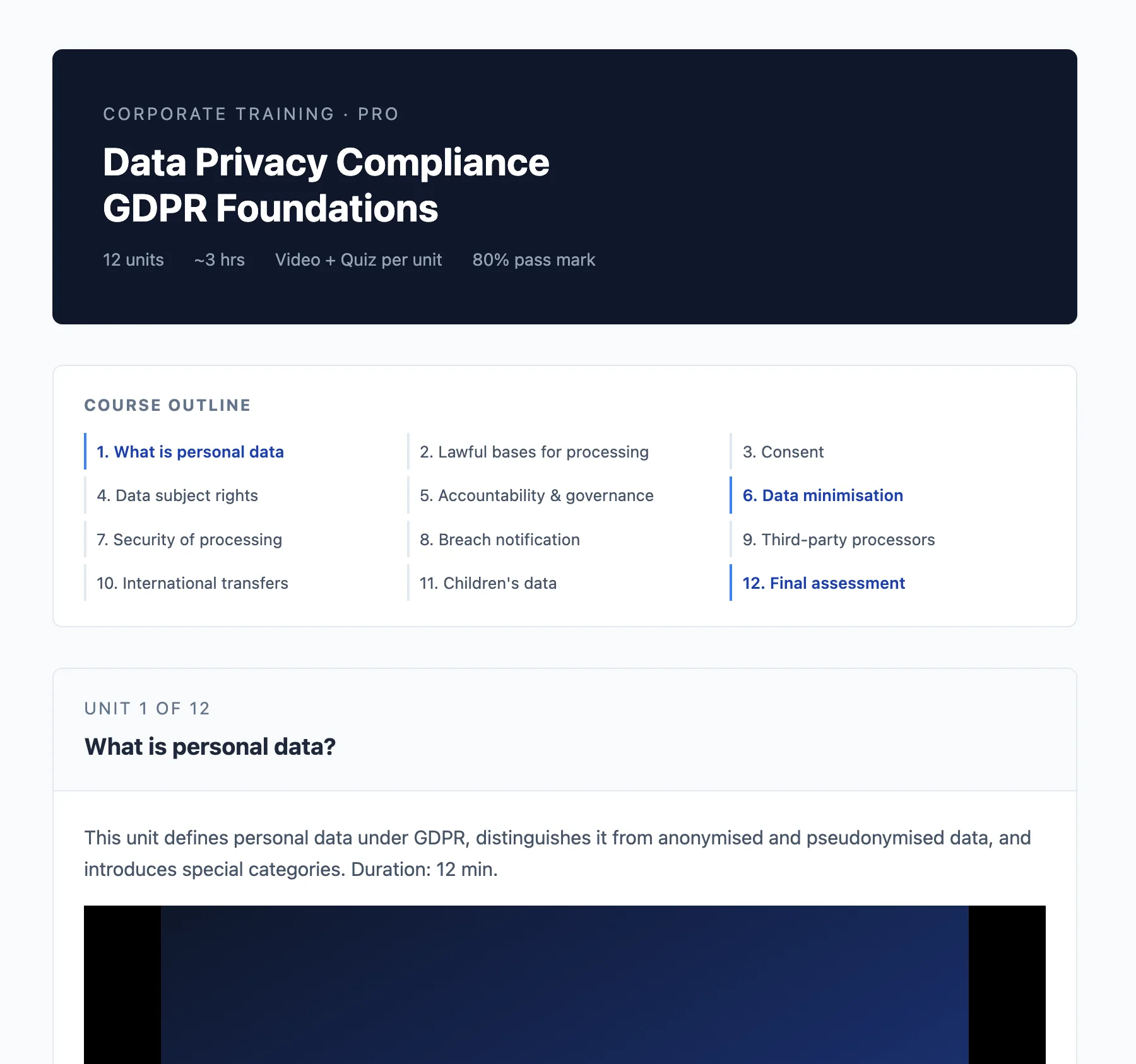
Twelve interactive units with explainer video, scenario exercises, and a final quiz, exportable to SCORM for a corporate LMS.
Connect Modula to the AI you already use to create galleries, timelines, exercises, maps and scroll-driven stories, accessible and well-tested.
How it works
Modula lives inside the assistant you already use: Claude, ChatGPT, or your coding agent. There's no new interface to learn.
Add Modula to your assistant's connectors. You do it once and it stays there.
Tell it what you need. It looks for the right components, follows a curated schema, and puts together a first version. From there you review, regenerate, and adjust the details.
What you get is a self-contained page: embed it in your site, download it, or take it into your LMS.
Why Modula
Generic tools ask the model to invent components from scratch every time, which is fine for a prototype and less so for something that has to go live. Modula starts from a fixed library of accessible, well-tested components, plus schemas that tell the assistant how to put them together. Every result gets a solid structure and behaves the way you expect.
Galleries, timelines, exercises, maps, formulas, 3D, charts, scroll-driven stories: more than 90 components, built and refined one real project at a time.
Keyboard, screen readers, contrast, reduced motion: we look after them component by component, with the goal of meeting the WCAG AA standard.
Instructions that tell the assistant how to structure a lesson, a presentation, a documentary, a geostory, or an assessment.
No proprietary runtime: download the bundle and it works on its own, on your servers and in any stack.
Plans
The way you work stays the same at every level. What changes is which components you can reach, what you're allowed to do with them, and where it all runs.
Free
For learning, experimenting, and non-commercial work.
In beta
For publishing your work, commercial use included.
On quote
For teams putting Modula inside their own product.
Examples
Real interactive experiences built with Modula — from compliance training to data journalism. New examples published regularly.
PreviewTwelve interactive units with explainer video, scenario exercises, and a final quiz, exportable to SCORM for a corporate LMS.
 Preview
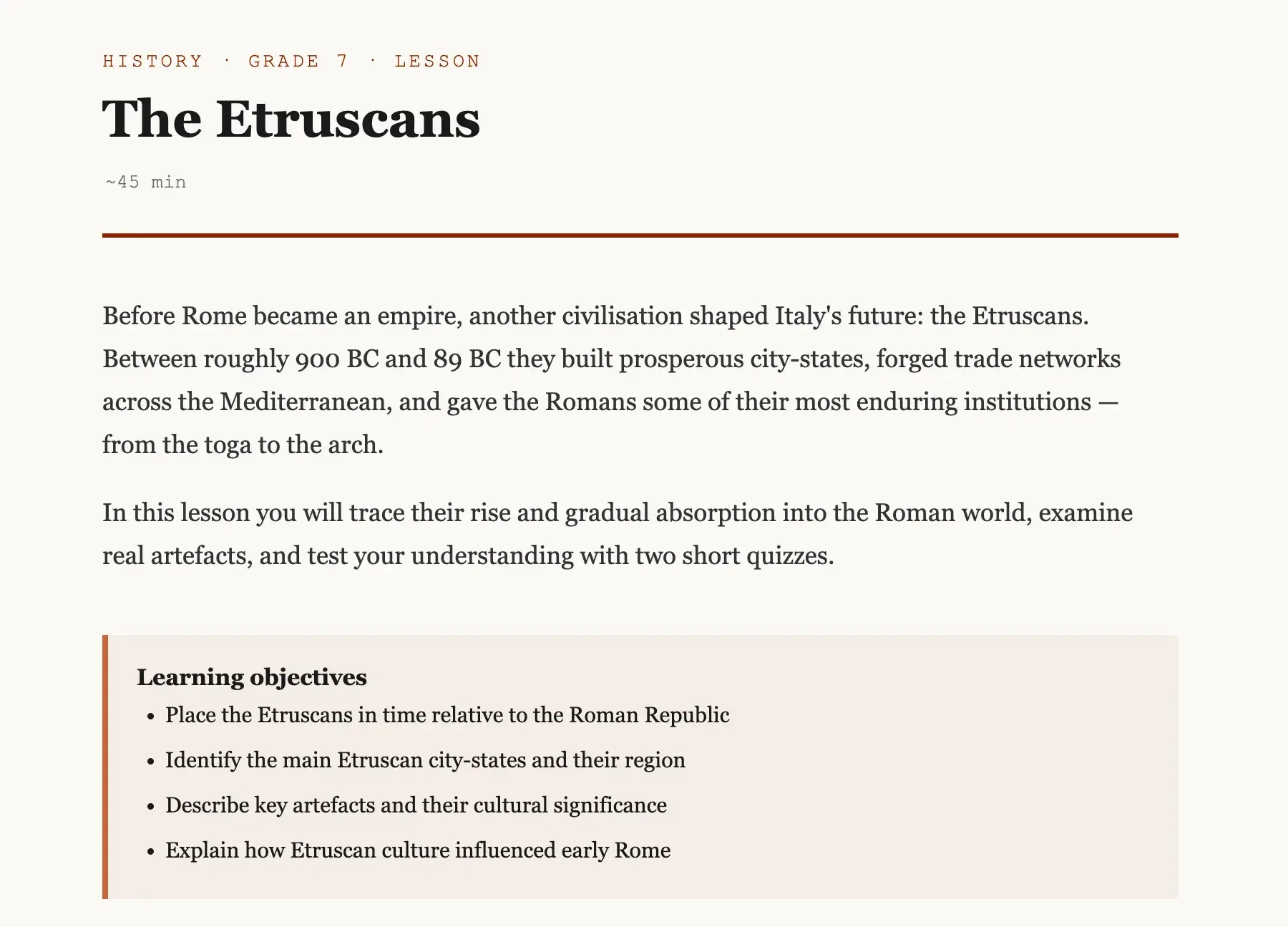
A history lesson built in the free Playground — timeline, image gallery, and multi-choice quiz, designed to be projected in class.
 Preview
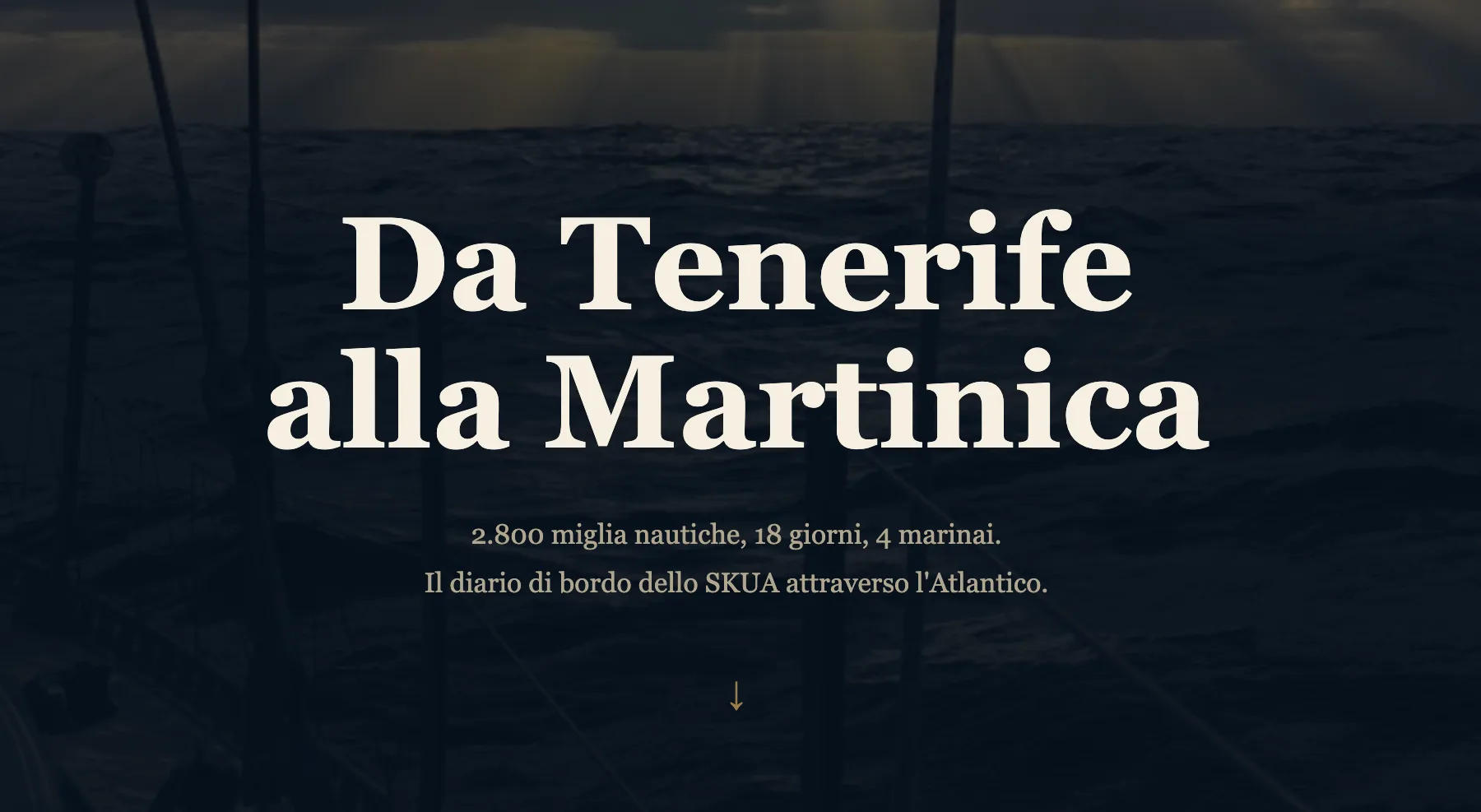
An ocean crossing retold as a scroll-driven map narrative with GPS track, photo stops, and per-stop journal entries.
 Preview
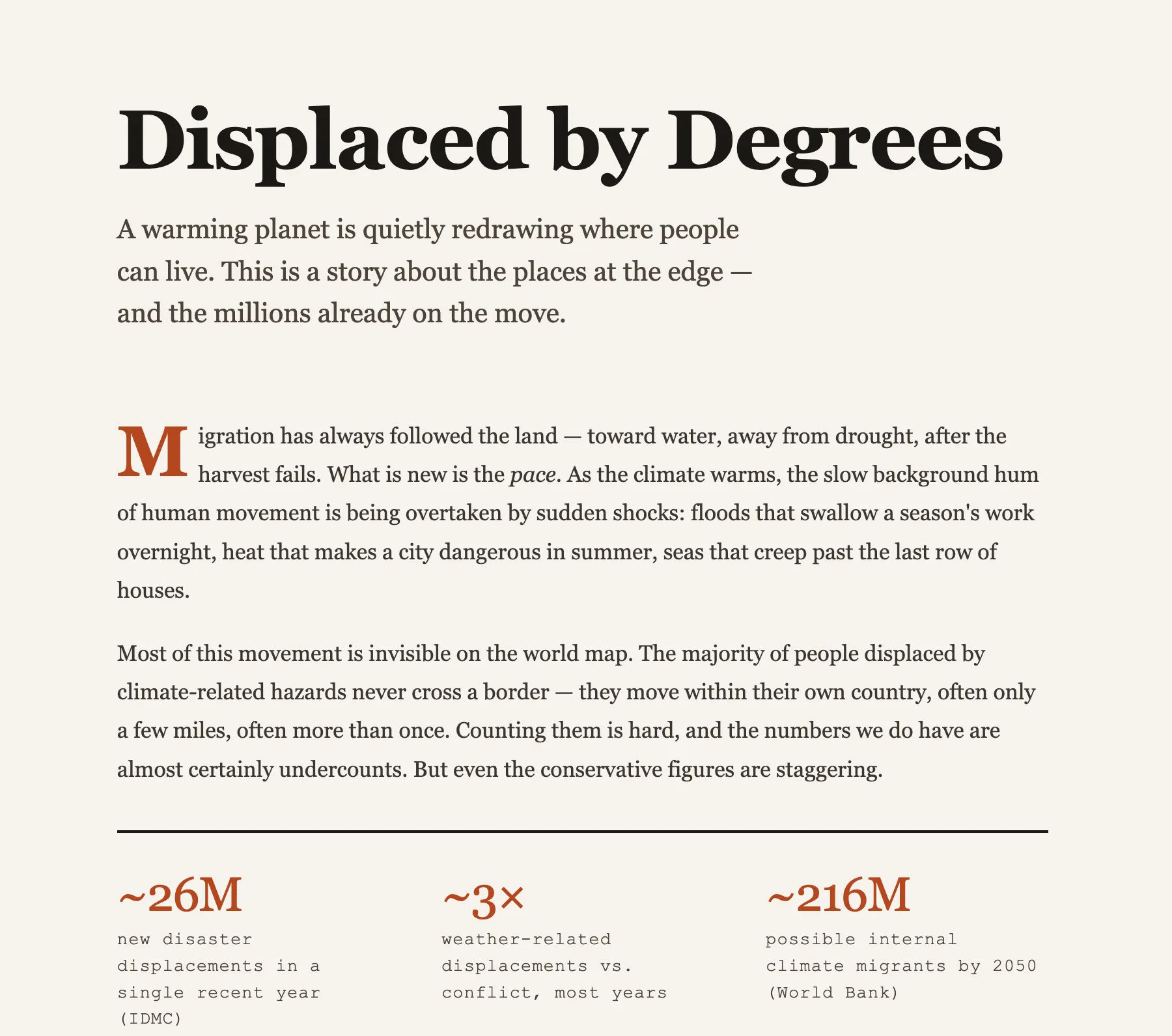
Long-form data narrative on climate displacement: IDMC and World Bank figures as a bar chart, before/after satellite comparisons, and an interactive hotspot map, in a neutral editorial theme.
 Preview
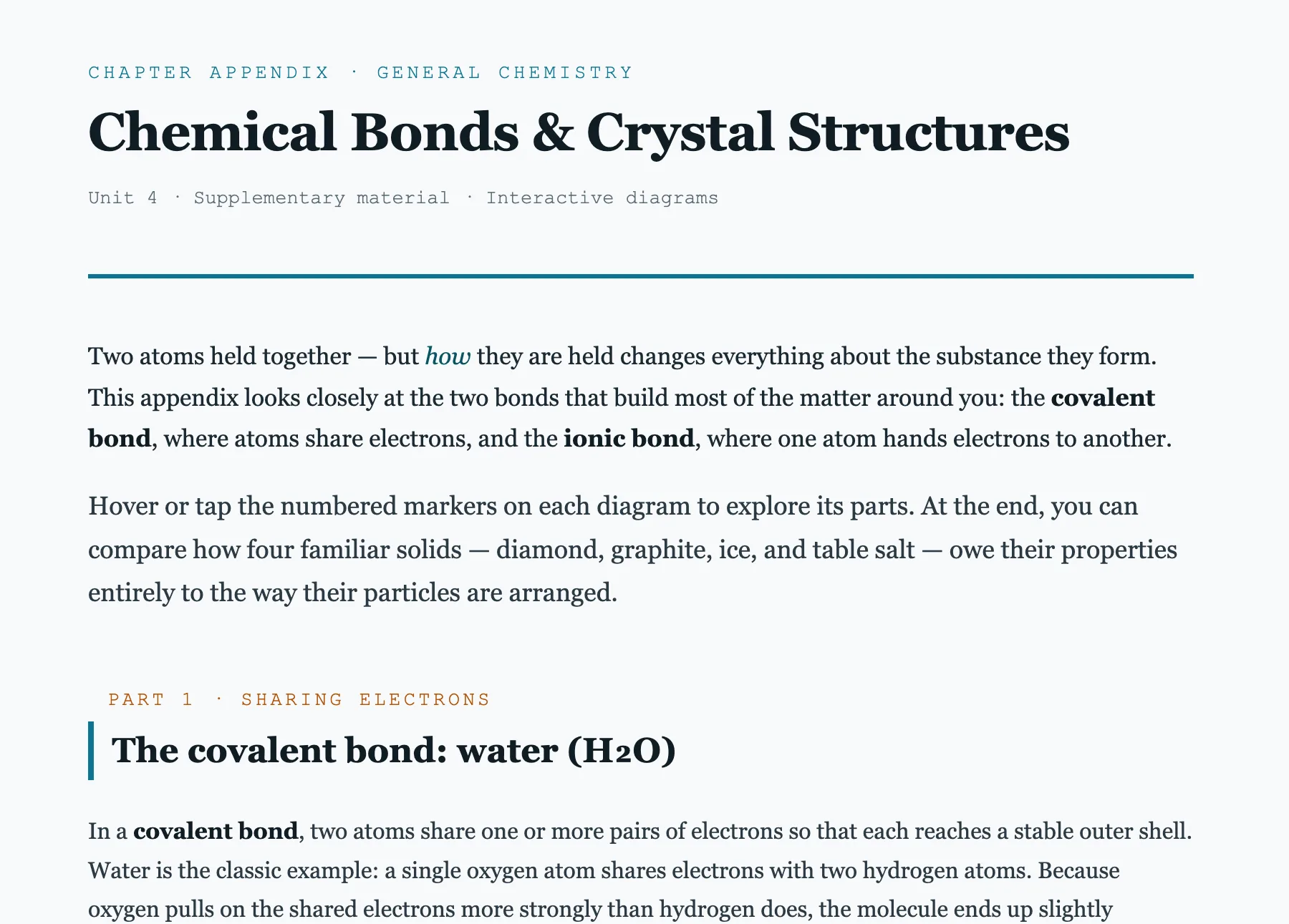
Supplementary appendix on chemical bonding for a school chemistry textbook. Annotated molecular diagrams with tappable hotspots, a side-by-side tour of four crystal structures, and flip-card concept checks.
 Preview
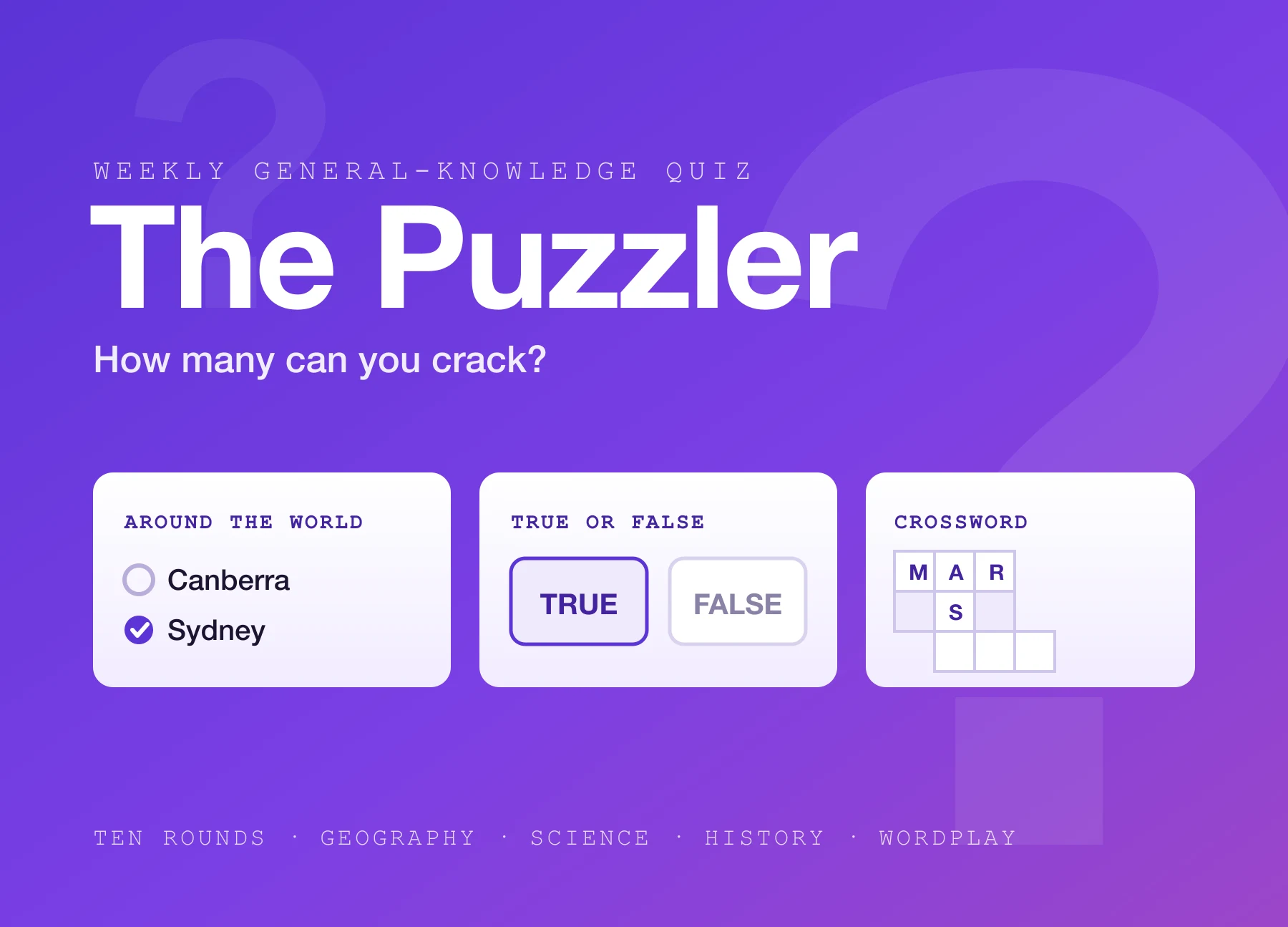
A weekly general-knowledge quiz: ten rounds of mixed trivia, from world capitals and noble gases to a closing crossword — all scored in one go.
 Preview
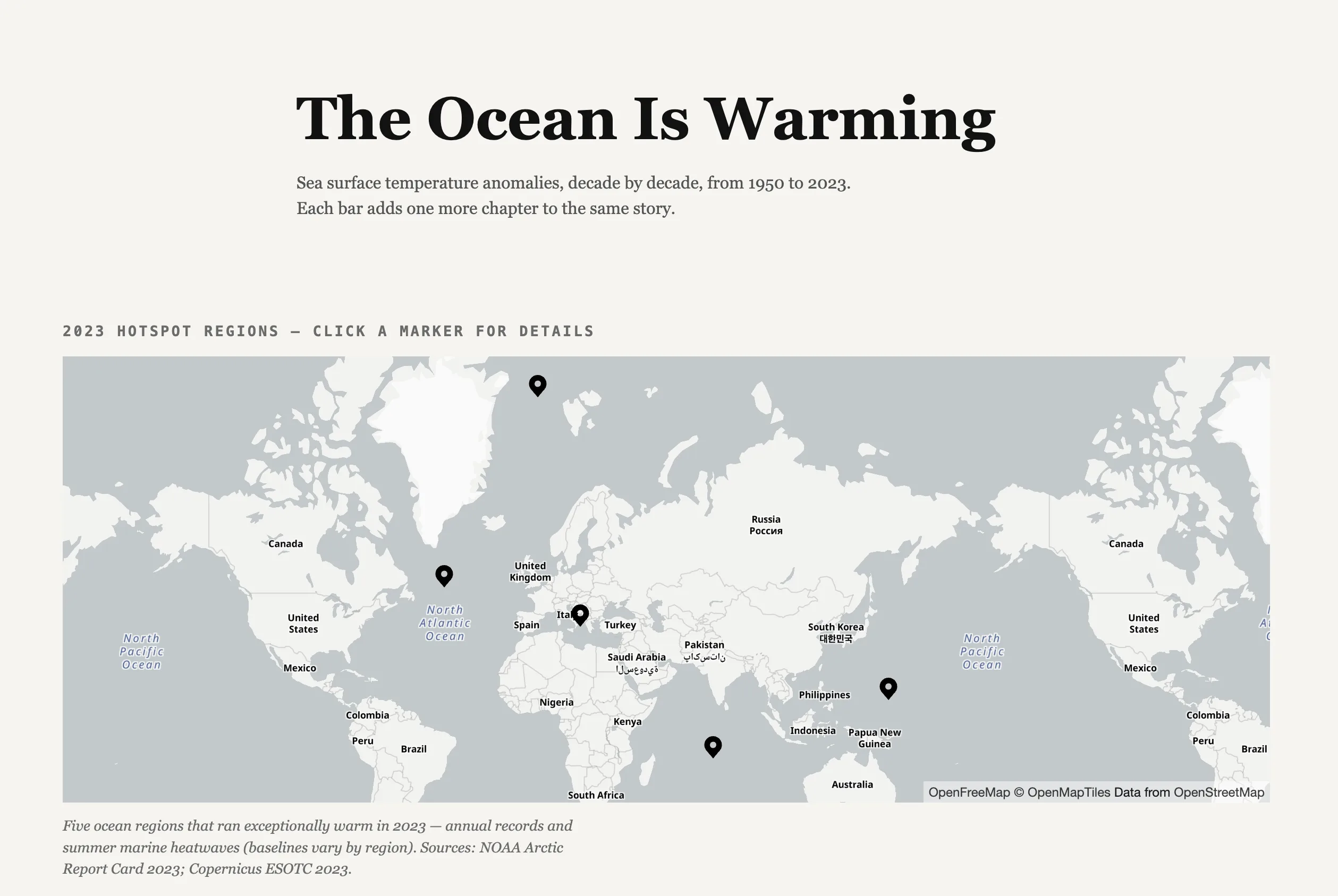
Scroll-driven explainer walking readers through ocean surface temperature anomalies from 1950 to 2023, one chart at a time.
 Preview
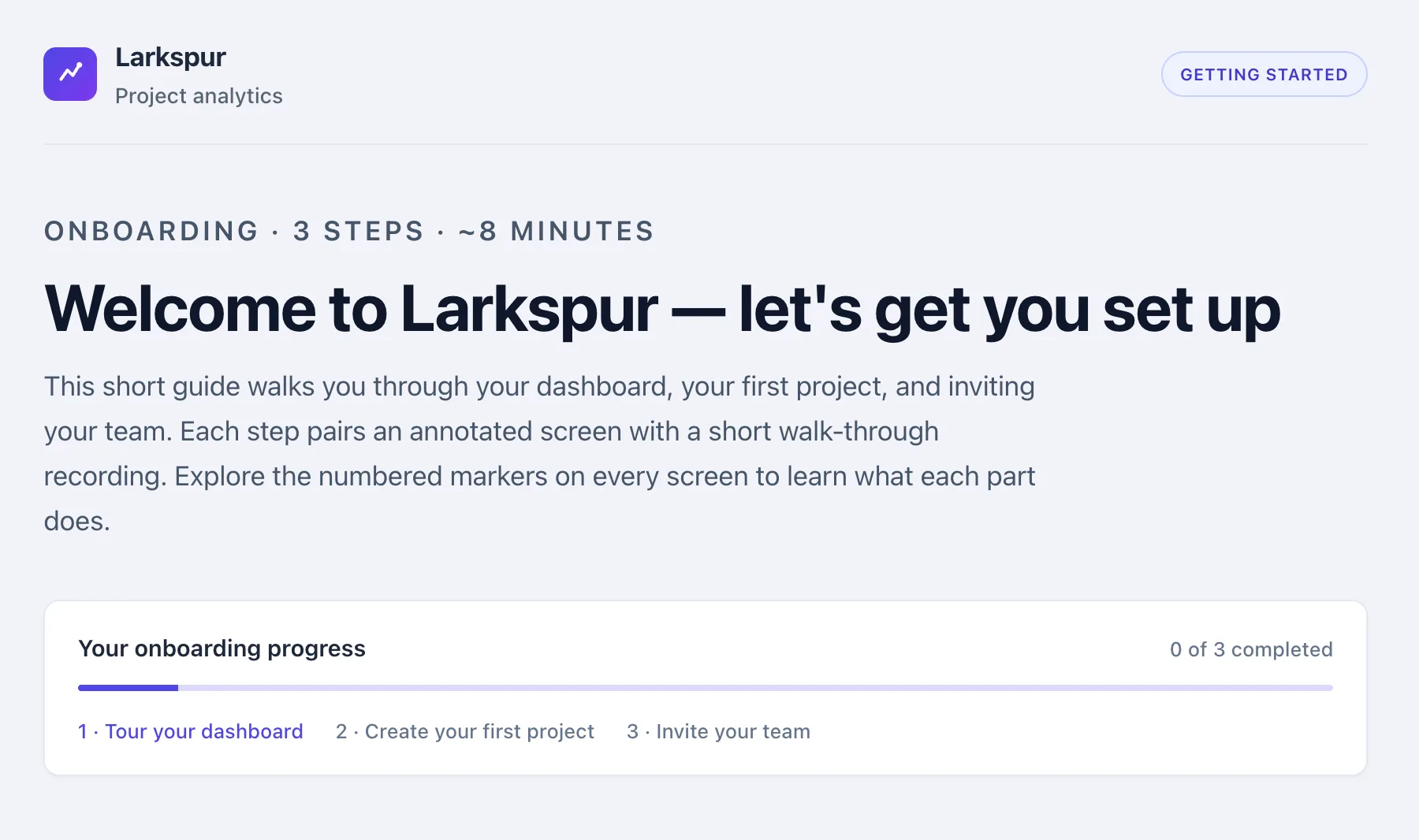
Interactive getting-started guide: annotated product screens with hotspot tours, short walkthrough recordings, and a step-by-step progress tracker.
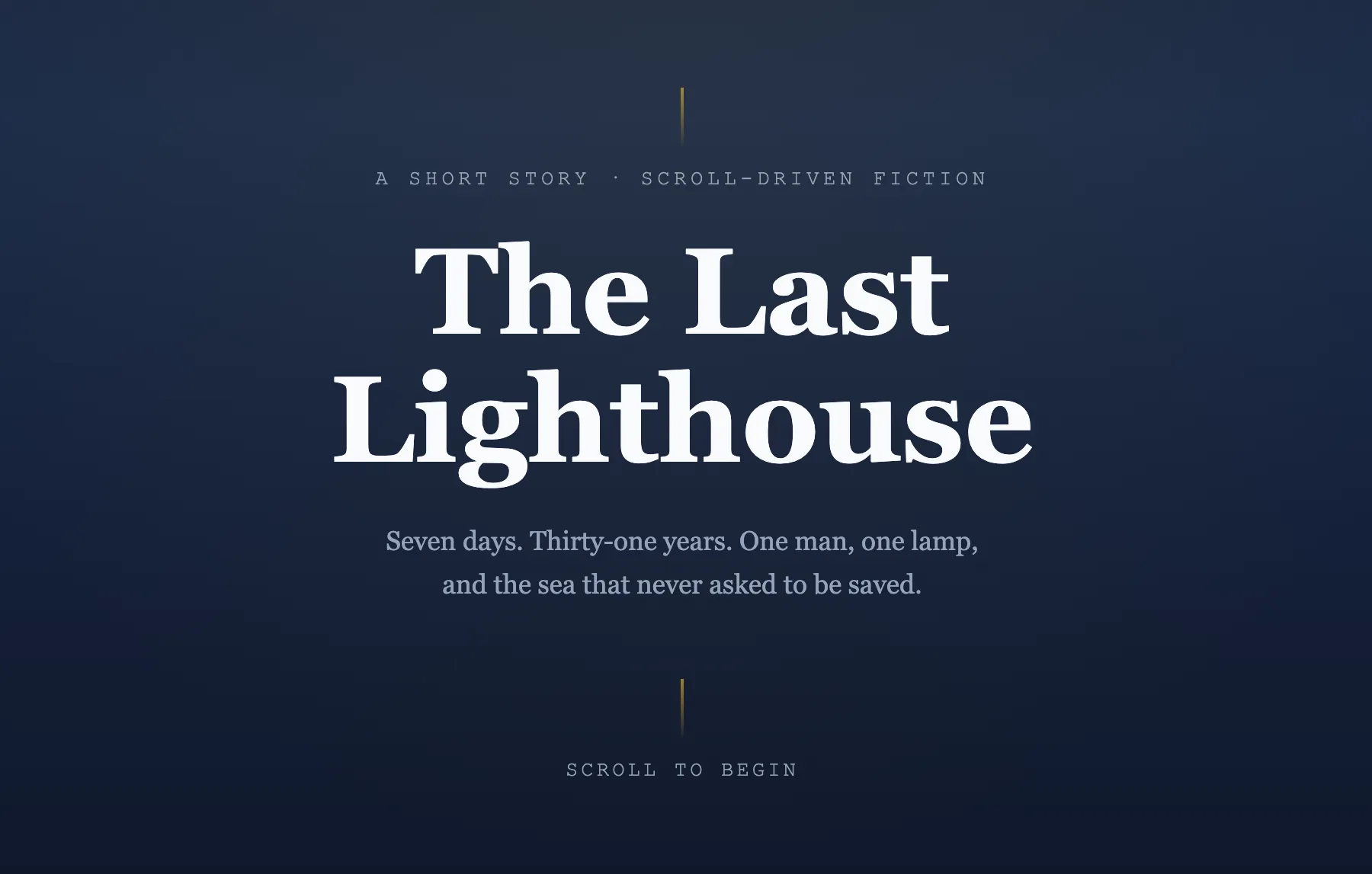 Preview
Independent writer’s short story published as a scroll-driven piece with illustrations that change with each scene.
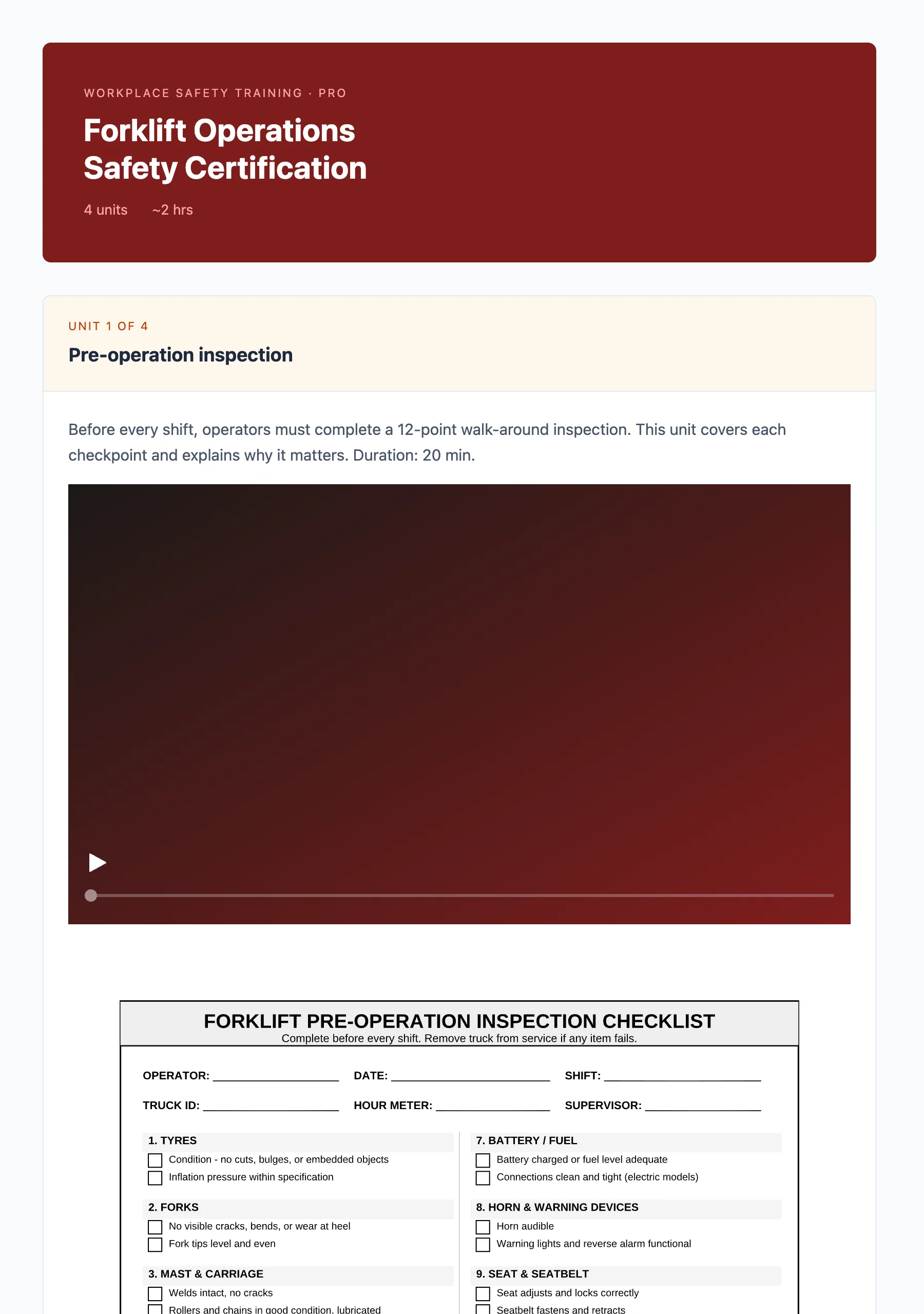 Preview
Four-unit training on forklift safety procedures. Per-unit assessment, end-of-course summary, SCORM-exportable.
CDK
With the CDK plan Modula goes inside your product: the catalog, the collaborative editor and the backend all run in your infrastructure.
Exercises, result tracking, SCORM packaging, and the integrations your LMS expects. Meant for educational publishers, LMS vendors, training providers, and L&D teams.
Scroll-driven stories, galleries, timelines, maps and data, with content coming from your own media library and staying structured as linked data. Meant for publishers, museums, archives, and newsrooms.
The collaborative editor you embed in your product: your users arrange blocks of text, media, timelines, galleries and exercises, reorder them, and edit the same page together, with an AI assistant alongside. No code involved. The one below is an example configuration: which blocks are enabled, the theming and the integrations are defined project by project.
Who’s behind Modula
We’re a design studio in Bologna: we design and build interactive content for publishing, culture, and education, one project at a time, refining each component until it’s accessible, solid, and made to last. Modula is the culmination of these years of care and craft.
More about ChialabGet in touch