History · Grade 7 · Lesson
The Etruscans
Before Rome became an empire, another civilisation shaped Italy's future: the Etruscans. Between roughly 900 BC and 89 BC they built prosperous city-states, forged trade networks across the Mediterranean, and gave the Romans some of their most enduring institutions — from the toga to the arch.
In this lesson you will trace their rise and gradual absorption into the Roman world, examine real artefacts, and test your understanding with two short quizzes.
- Place the Etruscans in time relative to the Roman Republic
- Identify the main Etruscan city-states and their region
- Describe key artefacts and their cultural significance
- Explain how Etruscan culture influenced early Rome
A civilisation in time
Scroll left and right to explore eight centuries of Etruscan history.
Iron-age Villanovan settlements in what is now Tuscany and northern Lazio mark the earliest phase of what will become Etruscan civilisation. Cremation burials and distinctive pottery define the culture.
Distinct Etruscan city-states — Tarquinia, Caere (Cerveteri), Veii, Vulci, Populonia — develop along the Tyrrhenian coast and inland valleys. Each is independent but shares language, religion, and artistic tradition.
Etruscan trade networks reach southern France, the Iberian Peninsula, and the eastern Mediterranean. Luxury goods — wine, olive oil, fine bronze-work — flow in both directions. Etruscan kings rule Rome itself during this period.
The last Etruscan king of Rome, Tarquinius Superbus ("the Proud"), is expelled. The Romans establish a Republic. Despite losing political control of Rome, Etruscan cultural influence on the young city remains deep.
The Etruscan fleet is decisively defeated by the Greek colony of Cumae and the tyrant of Syracuse. Etruscan expansion southward into Campania is permanently checked, beginning a long period of contraction.
After a legendary ten-year siege, the Roman general Camillus captures Veii — the first major Etruscan city to fall to Rome. Its territory is distributed to Roman citizens, and its population absorbed.
Volsinii (Orvieto) is sacked by Rome after an internal revolt. The surviving population is relocated. By this date virtually all Etruscan city-states have become Roman allies or subjects, though Etruscan language and customs persist locally for centuries.
The Social War ends. Rome extends full citizenship to all Italian peoples, including the Etruscans. Their separate political and cultural identity gradually fades into the broader Roman world over the following generations.
Check your understanding — Chronology
Six artefacts that tell the story
Use the arrows to browse six objects from museum collections worldwide. Read each caption before taking the quiz below.
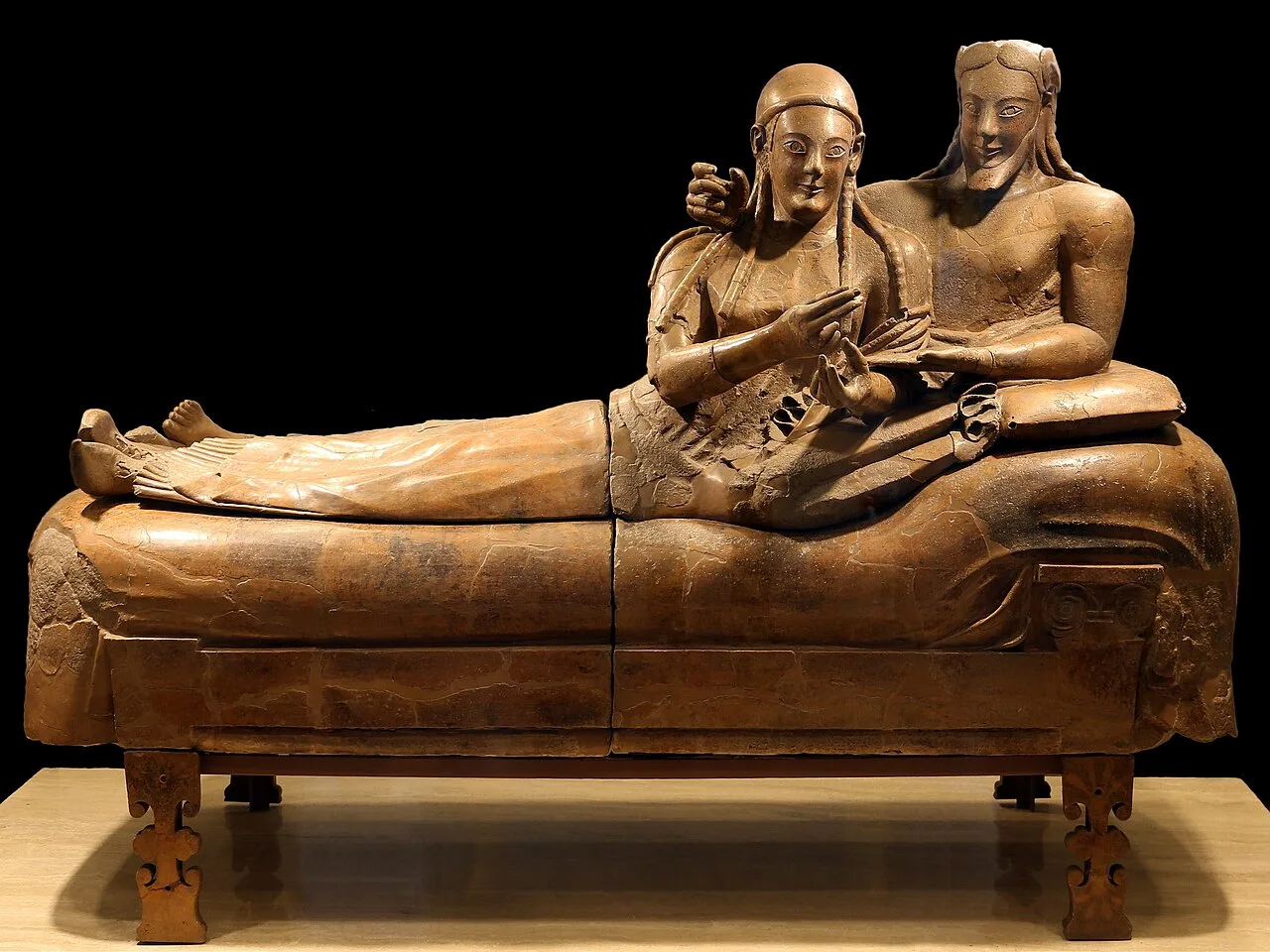
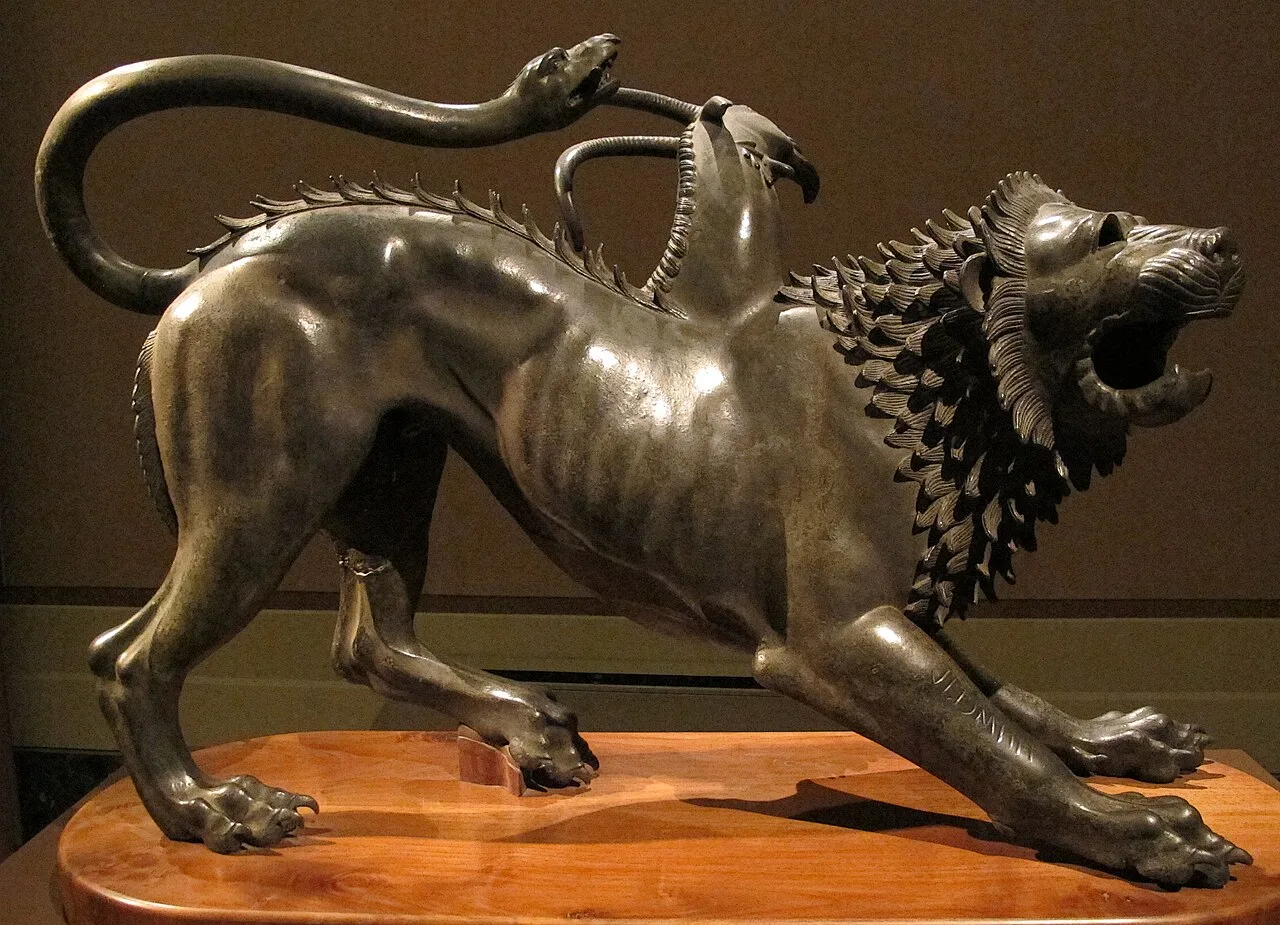
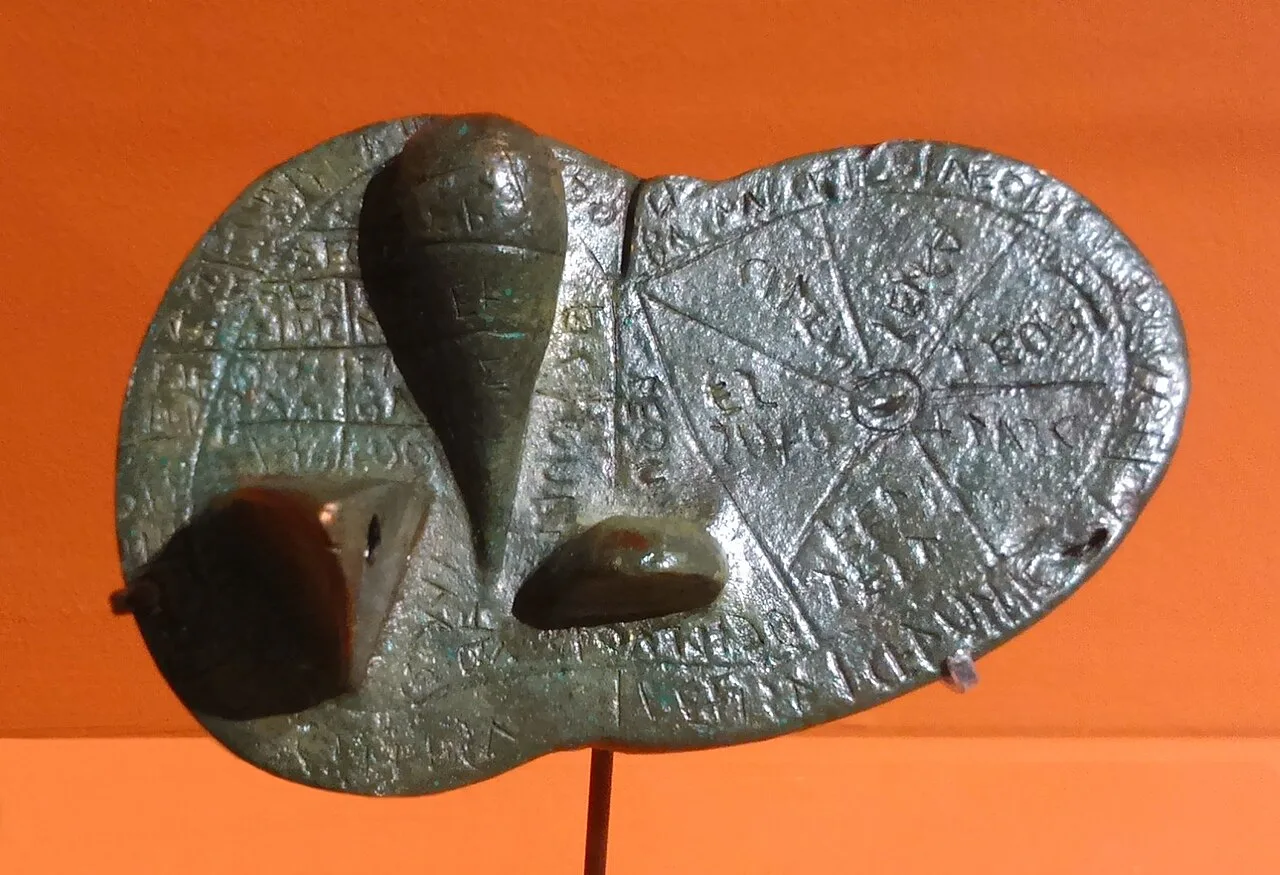
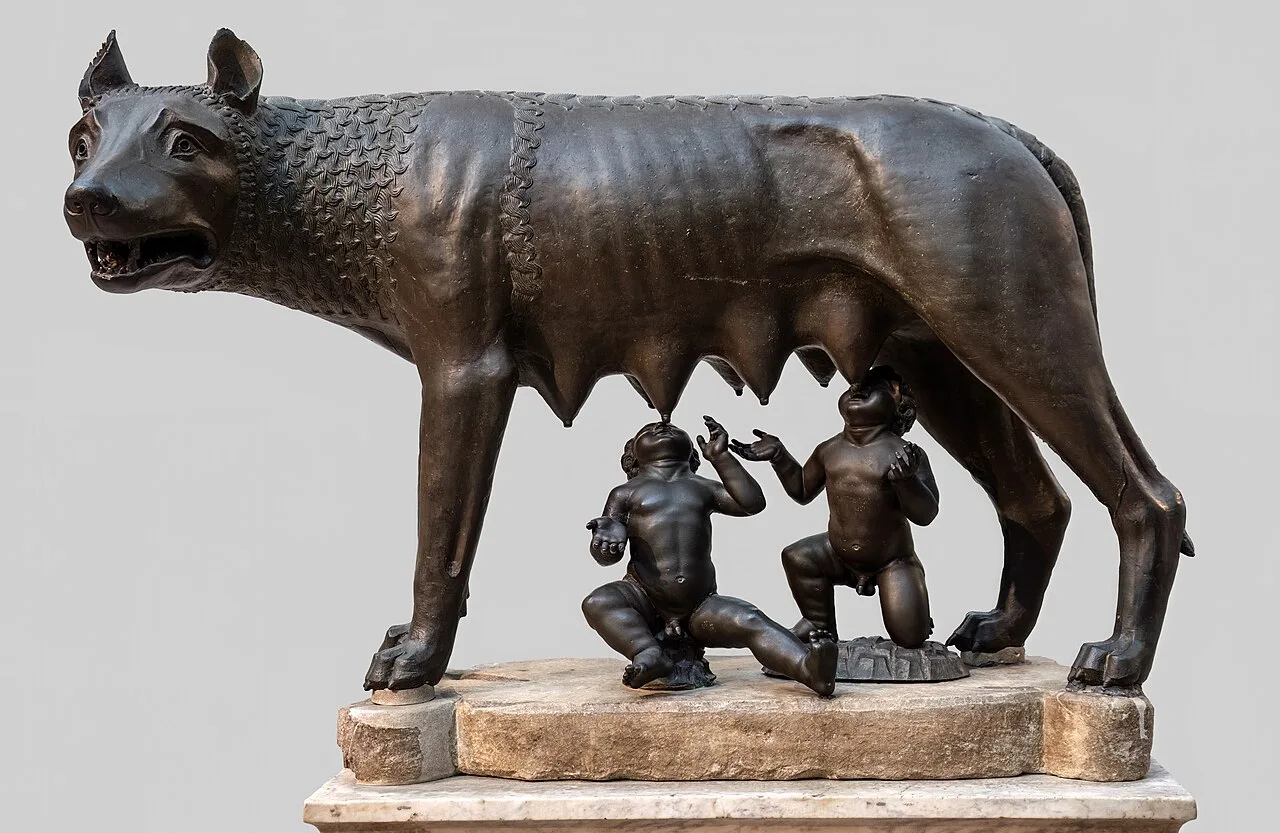
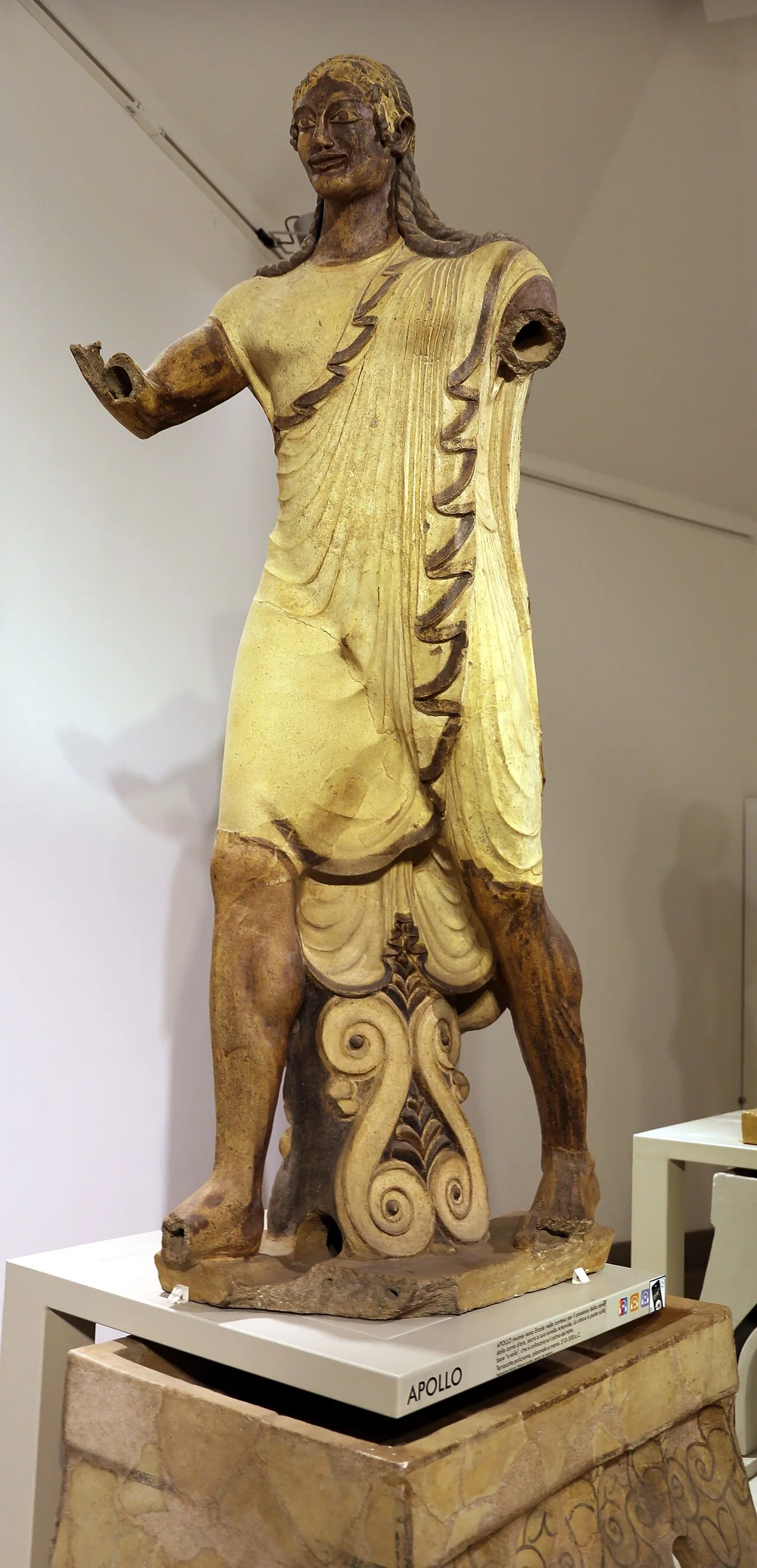
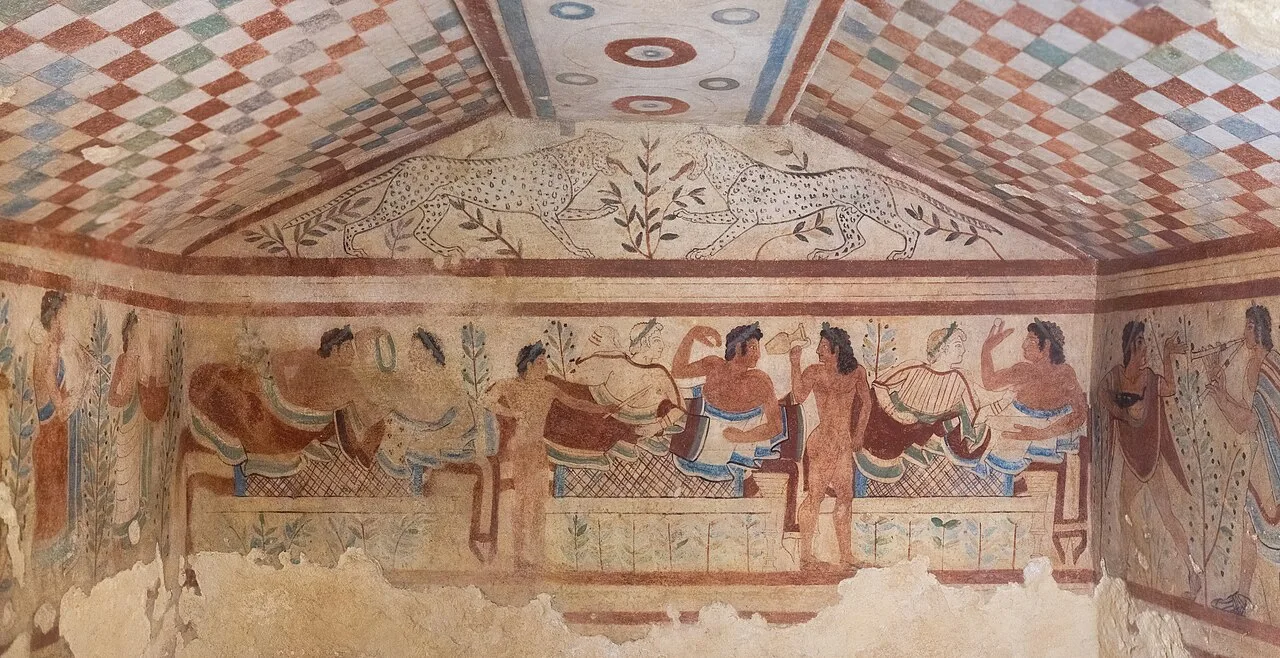
Artefacts from public museum collections. Images: Wikimedia Commons (CC0 / CC BY-SA).
Check your understanding — Art & Culture